emergency room crowding

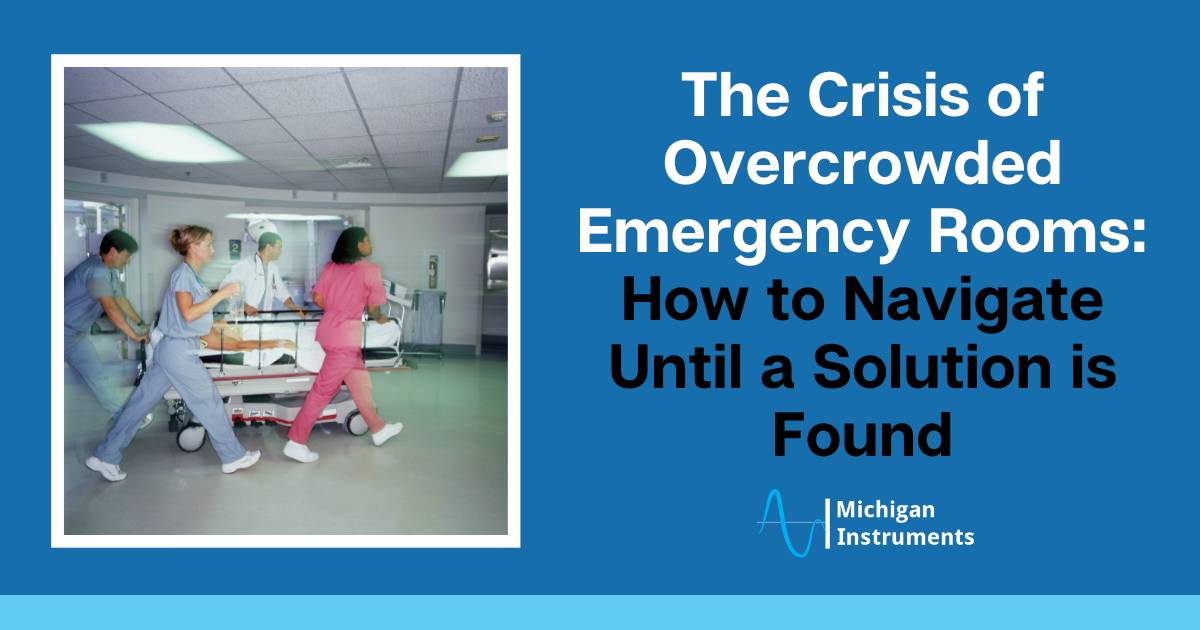
Emergency rooms (ERs) are designed to provide immediate medical attention to patients in emergency situations. However, the demand for emergency medical services continues to increase, leading to emergency room crowding all over the country. 

This has resulted in very long wait times and possible delayed treatment. In fact, a recent study found that over 90% of US emergency departments report overcrowding to be a problem, and nearly 40% reported that overcrowding occurs daily.

Below, we discuss how to navigate and manage overcrowded ERs until a national solution is found.

What Causes Overcrowded Emergency Rooms?

In order to assess possible solutions to the issue of overcrowded emergency rooms, we need to understand the causes.

The overcrowding of emergency rooms is caused by various factors, such as:

  • Utilizing the ER as a primary care provider: Many people use the ER as their primary care provider because they either don’t have access to primary care physicians or aren’t able to afford one.
  • Aging population: As the population ages, the demand for emergency medical services increases.
  • Chronic diseases: The effects of chronic diseases, such as diabetes and heart disease, may require more frequent emergency room visits.
  • Mental health services: Patients that experience mental health issues often use the emergency room as an attempt to get immediate help.  

Effects of Overcrowded Emergency Rooms

Overcrowded ERs can have significant effects on patient care, including, but not limited to:

  • Longer wait times: Patients may wait a long time before receiving medical attention.  In some cases, this can delay treatment and patients may experience pain for a long time.
  • Increased risk of medical errors: When Emergency Rooms are overwhelmed, medical staff may be rushing or reacting quickly.  This can lead to the possibility of medical errors.
  • Reduced quality of care: Overcrowding can lead to medical staff not being able to offer enough time to provide higher quality care before they have to move on to the next patient.

How to Manage a Crowded ER

While various solutions are being proposed to address the national crisis of overloaded ERs, hospitals can both manage and navigate the situation in the meantime using the following solutions:

1. Offer Options to “Non-Emergency” Patients 

A lot of the time, ERs get congested with patients who may not require immediate attention. 

To combat this issue, consider implementing a system where your staff kindly asks those patients to either wait until patients with urgent needs have been helped, or refer them to other facilities such as a nearby or on-site urgent care clinic.

It may be difficult to defer the patient that does not require emergency treatment, or delay treatment, but in reality, emergency rooms are built for true, life-threatening emergencies.

2. Communicate With Other ER Staff

Another solution is perhaps one of the most important aspects of any successful workplace: concise, clear communication. 

This is especially important in environments like an ER where time is valuable. The staff is moving quickly, and everyone involved has to think fast while also providing the best care.

Concise communication with nurses, clerical staff, and other doctors can assist with treating ER patients in a more efficient way. If there is poor communication in your emergency department, assess the situation to create a more productive system.

3. Smart Time Management

Consider the way your staff manages their time. For example, how are you spending time during periods when the ER is slow? While it may be smart to play catch-up during these times, don’t forget that it’s also vital for your staff to take care of themselves.

When they get a break, encourage them to sit down, have a snack, hydrate, or just relax.

During a slower time, it may also be beneficial to review both a patient’s history and previously gathered information. Some patients shouldn’t be seen without reviewing any history and/or notes that may have been recorded.  Your medical staff should be aware of this information before they are treated.   

4. Utilize Smart Medical Equipment That Acts Quickly and Efficiently

Working in a fast-paced environment like an Emergency Room is very physically demanding, and requires a lot of long and strenuous hours. 

Investing in equipment for your department helps your staff…

  • Reduce the physical strain on their bodies
  • Maintain their energy longer; thus having the physical and mental capacity to give patients better care, faster.

We provide superior medical devices that can assist your ER staff in emergency scenarios – our automated CPR machines. Our Life-Stat and Thumper CPR devices are lightweight and easy to use when patients are in cardiac arrest. 

They offer many advantages in an emergency room setting including quick set-up, the option to include ventilation with chest compressions, and most importantly, hands-free operation. That way, emergency physicians have the ability to focus on other life-saving measures.

There’s a reason why so many healthcare facilities across the country (and the world) use our devices. They’re a tried and true, one-of-a-kind solution during cardiac arrest; they help calm the situation and add an “extra set of hands.”

Learn More About How Our Devices Can Assist With Emergency Room Crowding

If your hospital is burdened with the stress of emergency room crowding and limited time and resources with the patients, take action with our revolutionary devices that will save your staff time and energy.

Our dedicated team has developed and maintained life-saving and research driven devices for over seven decades now, with no plans to stop anytime soon. Contact us today to request a free quote or learn more about our devices!

importance of continuing education ems

This year, May 21st – May 27th is National EMS Week. This week is dedicated to celebrating EMS employees and the important part they play in our nation’s communities to help save lives.

In light of this annual event, we would like to acknowledge the importance of proper education and technology for your EMTs. 

Below are the different ways to provide your EMTs with continuous education, and all the benefits that they provide. 

1. Understand Why Continuing Education is Important

All EMS organizations should offer continuing education within their facility, or in partnership with other healthcare organizations. However, continuing education for EMTs offers more benefits than just filling a requirement to maintain certifications. 

There are several benefits to providing your EMTs with education indefinitely, such as:

More Effective and Efficient Treatment

Keeping up with the latest medical information and technology allows EMS teams to provide better treatment for their patients. 

New practices and technologies (like ours) can save emergency medical professionals time by treating patients with methods that may not have been previously available.

Reduced Risk

Continuing education also reduces liability risk from malpractice or wrongful death. Failure to be consistent with education can result in incorrect treatment, misdiagnosis, or other life-threatening mistakes.

Networking Opportunities

In-person education programs, such as classes and conferences, allow EMS administrators to build connections and grow their network. Forming relationships in the industry can open new career paths, and create opportunities for shared knowledge.

2. Explain the Importance of Learning from Others

No matter what role you play or how long you may have been performing your job,  you should never assume there isn’t more to learn—especially in healthcare. Healthcare professionals should always be willing to learn new information or gain new perspectives from others. 

This also includes helping them acknowledge the value of feedback, and doing self-assessments to better understand their strengths and weaknesses.

3. Be Open to Multiple Teaching Techniques

While all of your EMTs should remain open to learning new things, they might not have the same preferred learning styles or methods. 

Some learn best in a classroom-like environment, while others may prefer educational apps, medical devices, academic journals, or mentors. Keep your options open when looking for educational opportunities for your staff.

The National Association of EMS Educators offers many options for educating EMS Professionals. This is just one of the many ways to find resources that you can use to craft an educational plan for your EMTs.

4. Select Your Best Personnel for QI Leadership

In order to have an effective quality improvement (QI) program, it is understood that providers want to do a better job of providing patient care. If your QI program is successful, it will help your EMTs recognize opportunities within their patient care and encourage them to make proper corrections.

If your QI program is less successful, you may have the wrong leader and might consider making a change to ensure more effective leadership.  

Enlist the help of your best and most qualified clinicians to do QI. Teach them about good culture, statistical process control, normal and special cause variation, and other improvement science concepts that drive them to improve care and be better leaders for the team.

5. Commit to Communication

One of the key reasons why things can go wrong in healthcare organizations is a lack of communication.  There is a failure to communicate issues, questions or changes that would benefit the team. 

When discovering concerns and/or opportunities to improve, it’s vital to share them with your staff. Encourage your team to practice continuous communication no matter what. 

An operation without communication is a recipe for disaster. In an environment where everyone is working collaboratively to save lives, all aspects of communication—including addressing errors, offering constructive feedback, and updating staff on changes in practices—are of utmost importance for a successful operation.

6. Provide Your Team With Michigan Instruments’ Medical Devices

Medical technology has been known to be an avenue for effective education for many healthcare professionals—especially those who practice emergency services. 

For example, our lung simulators can provide helpful training and practice for EMTs. They are fully adjustable and provide a dynamic response to therapy that accurately demonstrates how the human pulmonary system works. 

In addition, we offer outstanding medical equipment, such as our automated CPR machines. These help EMS teams to be more efficient and effective.  

Our Life-Stat and Thumper CPR devices support a quick and simple transition from manual to automated CPR with minimal interruption to compressions. 

The Hands-Free operation of our devices and the option to automatically ventilate the patient along with chest compressions gives the EMS team more time to focus on other life-saving activities. 

While very cost effective and easy to operate, these devices also can perform CPR on larger patients compared to other competing devices.

Learn More About How Our Devices Benefit Emergency Medical Practices

The importance of continuing education for your EMS team cannot be emphasized enough. However, our devices can grant your team new opportunities for both continuing education and effective patient care. 

In honor of National EMS Week, contact us today for more information about why thousands of medical professionals all over the world choose Michigan Instruments.

celebrate national nurses week

National Nurses Week begins every year on May 6th and ends on May 12th. Since 1998, this week honors the important contributions that nurses make every day, and reminds us to thank them for the hard work they do to keep patients healthy, happy, and alive.

To celebrate National Nurses Week, we encourage you to take some time to show your nurses just how much you appreciate them. Below, we highlight 5 easy ways to support them during this week and beyond. 

How to Celebrate National Nurses Week

1. Give Them a Thoughtful Gift

Gifts are always a great way to extend appreciation. There are lots of gift ideas that your nurses would love. 

You could give a practical gift like a new pair of scrubs or comfortable shoes for work, or make it more personal and find out what your nurses are interested in and give them that—maybe it’s a gift card to their favorite restaurant or even a bouquet of their favorite flowers. 

Whatever you choose, they’ll appreciate the kind and thoughtful gesture.

2. Praise New Nurses

Being a nurse is stressful enough as it is. However, being brand new at the job is even more of a challenge. If you have nurses in your facility that are just starting off, be sure to tell them that they’re doing well, and praise them for tasks they excel in.

3. Praise Long-Term Nurses

Sometimes when a nurse has been doing their job for a long period of time, they begin to burn out.  Long term nurses may not receive the praise they deserve, as they have been doing the job a while and it’s often expected for them to excel.  

To some, offering praise may seem like a small gesture. However, to a long-time nurse, it’s a big deal. Whether building confidence or offering continued appreciation, recognizing and praising their work encourages them to get better and better every day.

4. Lend an Ear

For a lot of nurses, knowing that someone cares about their needs and is willing to listen can be very comforting. Letting them know you’re there to talk will help them feel a little less stressed and a lot more valued. 

Take the time to emphasize that you’re available to talk, or just listen, in times of stress. However, if able, it does mean more to do something to make a difference and work toward solving their problems. 

5. Invest in Helpful Technology

Being a nurse involves a lot of physically demanding tasks for several hours at a time. These tasks can lead to exhaustion and burnout. Consider investing in equipment that can lessen physical strain and help them maintain their energy longer.

Michigan Instruments provides outstanding medical technology for hospitals that can make work easier for your staff, such as our automated CPR machines

Our Life-Stat and Thumper CPR devices are lightweight and easy to use. They support a quick and simple transition from manual to automated CPR with minimal interruption to compressions. They can also perform CPR on larger patients than other competing devices.

The option to ventilate with chest compressions and hands-free operation of our CPR compression machines gives physicians the ability to focus on other aspects of the resuscitation effort. When lives are saved, your medical staff’s mental health benefits greatly, thus reducing burnout and turnover.

Support Your Physicians With Revolutionary Medical Devices

Learn why thousands of medical professionals, directors, and educators worldwide have chosen to partner with us and trust our equipment. 

Discover all the endless benefits that our machines provide. Contact us for more information about how we can contribute to your health care facility today!

recruit medical students

As the healthcare industry continues to grow, so does the demand for qualified medical professionals. To do this, you need to recruit medical students to your program.

However, with so many accredited medical programs available, it’s now more difficult than ever to attract students to your program. To help you stand out among other programs, keep reading to learn about ways to attract students to your medical program.

How to Recruit Medical Students to Your Program

1. Emphasize Your Program’s Unique Features

It’s important to highlight the specific aspects of your program that set it apart from others. This could include specialized training in a certain area, access to state-of-the-art technology, or opportunities for hands-on experience.

Students want to know what to expect when coming into a new program, so be transparent and explain to them all the benefits you want them to know about. This way, they can make an informed decision when they’re choosing between programs.

2. Share Success Stories

Prospective students want to know that your program is going to help them achieve their career goals. To demonstrate the knowledge and skills that your program can give them, share stories of alumni who have gone on to find successful careers in the medical field and highlight how your program helped them get there.

This will not only show your capability of teaching students the curriculum they need, but will also help them find inspiration in others that have done the same program. Remember, word of mouth is a powerful tool.

3. Use Social Media

Social media platforms, like TikTok, give you the opportunity to showcase your program’s offerings and connect with potential new students. Share photos and videos of your facilities, faculty, and students to give a behind-the-scenes look at your program.

It’s important to be informative—however, it’s just as important to craft personal messages to connect with your audience.

4. Offer More Scholarships and Financial Aid 

The cost of medical programs can be a major barrier for a lot of students. Offering scholarships and financial aid can help attract students who may not have otherwise considered your program.

There are lots of resources available for more information about providing financial help. Before doing so however, you need to read up on the IRS requirements for starting a scholarship fund.

5. Utilize Advanced Technology

Medical technology has made impressive advances in the past decade. For instance, our lung simulators can provide helpful training and practice for medical students, particularly in the Pulmonology and Respiratory fields.

Our Lungs offer residual lung volumes and a dynamic response to therapy that realistically demonstrates how the human pulmonary system works. 

What’s the Difference Between Michigan Instruments’ Lung Simulators and Other Devices on the Market?

Unlike other devices on the market today, our lung simulators are available in both adult and infant models. This range of calibrated lung compliance and airway resistance settings allow our devices to replicate hundreds of healthy and diseased lung conditions, while providing accurate data to contribute to your testing, research, and training.

Our recently launched Spontaneous Breathing Lung is a great addition to any respiratory therapy program. The SBL™ provides accurate simulation of a breathing patient and is available on any of our lung simulators. It’s beneficial for designing, testing, and training for non-invasive and supportive modes of ventilation and oxygenation. 

With our SBL™, the sky’s the limit. Our devices have been used for almost everything—from studying the dispersion of aerosols and inhalers, to assessing the responsiveness of the latest technologies. 

Learn More About How Our Devices Can Benefit Your Medical Program

For more information about our devices and how they can better your program, contact us today and get in touch with a service specialist that can answer all your questions!

how to reduce employee turnover in healthcare

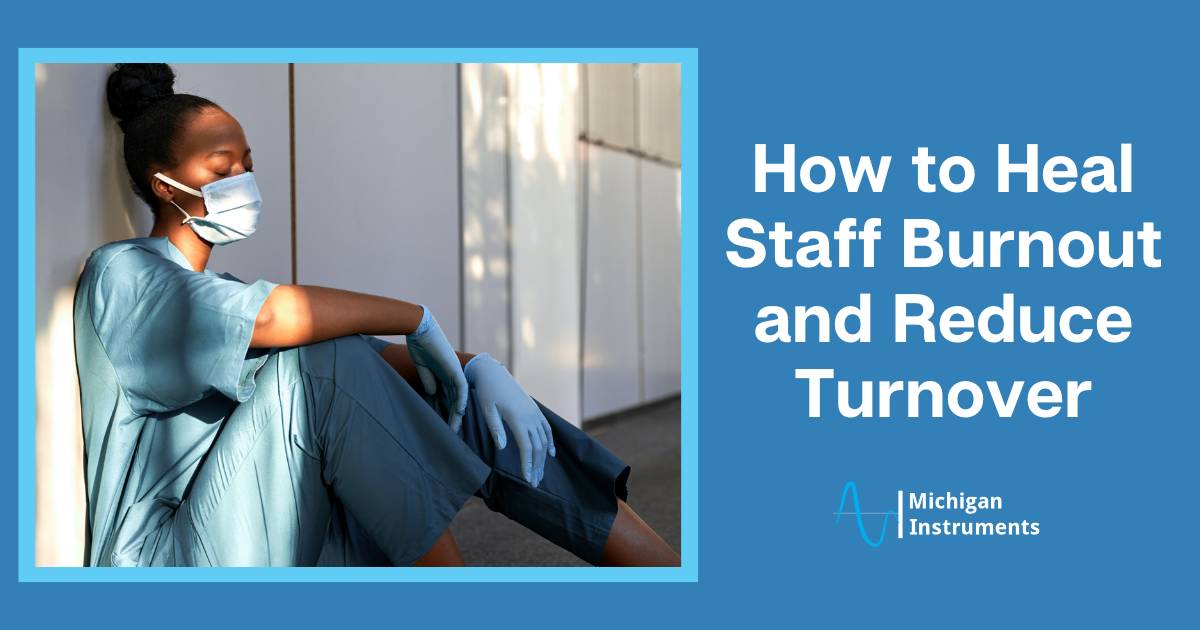
Did you know that 58% of physicians have feelings of burnout? Similarly, 54% of those physicians say it severely impacts their lives. These statistics alone show how important it is to reduce employee turnover in healthcare. 

It’s no secret that medical staff burnout and shortages are a major issue, especially since the COVID-19 pandemic. In fact, a recent report shows that by 2025, the U.S. is estimated to have a shortage of approximately 95,000 nursing assistants, 98,700 medical and lab technologists and technicians, and more than 29,000 nurse practitioners.

However, with a few tactics and changes in rituals, it’s possible for hospitals to work towards fixing this problem—and even preventing it before it starts.

Below, we highlight some strategies to reduce burnout in your employees and prevent staff shortages.

How to Reduce Employee Turnover in Your Healthcare Facility

1. Understand What Causes Burnout

Before you can attempt to solve the issue of burnout in your staff, it’s important to understand the most common causes. 

It could also be a combination of several factors. Causes include, but are not limited to:

  • Inadequate support
  • Excessive workloads
  • Administrative burdens
  • Scheduling problems
  • Stress from being unable to provide the care patients need
  • Family responsibilities
  • Time pressure

You can begin to resolve most of these issues within the workplace. Therefore, you and your team should take some time to assess your scheduling and patient-care strategies to see where there’s room for improvement, such as what medical devices your facility uses.

2. Encourage (and Facilitate) Healthy Sleep Habits

A lot of stress that employees feel could be coming from a lack of healthy habits. Talk to them about making changes to their everyday routine; but more importantly, how you can help support them. 

The CDC recommends at least 7 hours of sleep each night. However, for your healthcare staff, getting 7 hours every night is easier said than done. Since poor sleep habits can lead to increased stress, encourage sleep breaks during long shifts. 

Facilitate this by making sure your on-call rooms promote healthy sleep environments, such as black-out curtains, white noise machines, and more. 

3. Provide Mental Health Resources

Consider implementing a system that provides mental health support for your employees. This can be done in a number of ways. 

For example, consider compiling a list of resources on your internal website or on a paper handout, including contact information for therapists, tips for combatting mental health issues from professional sources, group therapy session information, and more.

Don’t let them stress about the money—provide numbers for programs that will help them at no cost, or readjust your benefits so that it includes mental health assistance and RX insurance.

It may also be helpful to provide an in-house specialist for confidential meetings with your employees, if they feel that they need help, or don’t have the energy/time to schedule themselves.

4. Create a Healthy Work Environment

As a leader in your healthcare facility, there are tons of small things you can do that can make a huge difference. One way is to create a space where your employees can meditate, have some peace and quiet, make private phone calls, or even take a quick nap. 

Another way is to foster an open environment where your staff feels comfortable enough to reach out about things that are bothering them. Maybe this is sending out quarterly surveys for employee feedback. This not only creates an opportunity to support them, but also to get honest feedback about aspects of your workplace to improve upon. 

Lastly, don’t forget to acknowledge their hard work. Working in healthcare is a stressful and often thankless job. Remember to appreciate them and provide positive feedback to reassure them that even if they make mistakes, their work is valued.

Want to Reduce Employee Turnover in Your Healthcare Facility?

Did you know that Michigan Instrument’s automated CPR machines can lower exhaustion among your employees?

Our hands-free devices perform effective, customized CPR that never tires. They allow medical professionals to concentrate on other life-saving procedures and provide improved access to the patient. Additionally, they allow rescuers to safely position themselves to avoid personal injury.

For more information, contact us today!